

Cyber threats are growing faster than most businesses can keep up with. From ransomware attacks to phishing scams and data breaches, companies of all sizes are constantly at risk. This is where cybersecurity as a service becomes a game-changer.
Instead of building expensive in-house security teams and infrastructure, businesses are now shifting toward cloud security services delivered by experts. This modern approach offers continuous protection, real-time monitoring, and faster response to threats without overwhelming internal IT teams.
In this blog, I’ll break down how this model works, why it matters, and how it is transforming the way organizations handle digital security.

Content
What Is Cybersecurity as a Service?
Cybersecurity as a service (CSaaS) is a cloud-based security model where protection tools and expertise are delivered through a subscription-based service.
In simple terms, instead of managing everything internally, businesses outsource their security needs to professionals who provide:
- Continuous threat monitoring
- Managed security services
- Security operations center (SOC) support
- Incident detection and response
- Compliance and risk management
If you’ve ever wondered how it works, the answer is straightforward: it combines advanced security tools with expert monitoring to protect systems 24/7.
This model is especially useful for companies that lack internal cybersecurity teams but still need enterprise-level protection.
How Cybersecurity as a Service Works
To understand its value, it helps to look at the working process behind it.
1. Continuous Monitoring
Security providers monitor networks, devices, and cloud environments in real time using advanced tools and analytics.
2. Threat Detection and Response
Using AI-driven systems and expert analysts, threats are identified early. This includes malware, phishing attempts, and unauthorized access.
3. Security Operations Center (SOC)
A dedicated security operations center (SOC) acts as the command hub where security experts analyze alerts and respond to incidents.
4. Incident Response
If a threat is detected, the system immediately triggers automated or manual response actions to minimize damage.
5. Reporting and Compliance
Businesses receive detailed reports to help with audits, compliance requirements, and security improvements.
This structure ensures how cybersecurity as a service protects against cyber threats is not just reactive but also preventive.
Key Features of Cybersecurity as a Service
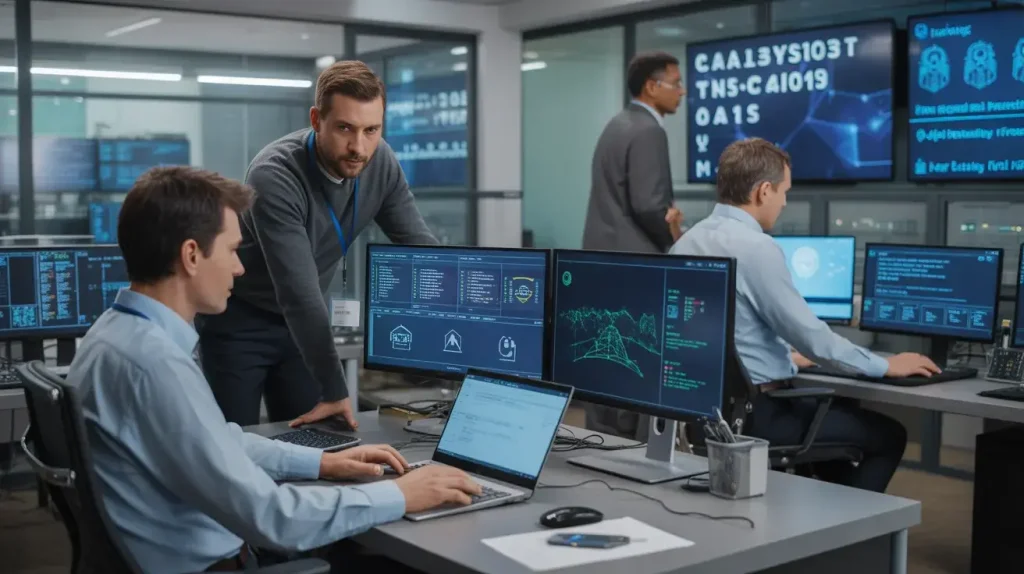
Modern CSaaS platforms come with powerful capabilities designed for different business needs:
- Endpoint protection across devices and users
- Threat detection and response in real time
- Firewall and network security management
- Data breach prevention systems
- Identity and access control
- Continuous vulnerability scanning
These features are part of a broader ecosystem of cybersecurity solutions for businesses, helping organizations stay protected without complex infrastructure.
Benefits of this security model
Businesses are rapidly adopting this model because of its clear advantages.
1. Cost Efficiency
Instead of investing heavily in hardware, software, and cybersecurity staff, companies pay a predictable subscription fee.
2. 24/7 Protection
Cyber threats don’t follow office hours. CSaaS ensures round-the-clock monitoring.
3. Scalability
As your business grows, security services scale with you effortlessly.
4. Expert Support
Access to experienced cybersecurity professionals who specialize in handling complex threats.
5. Faster Response Time
Automated detection systems combined with human expertise reduce response time significantly.
These are some of the key advantages for small businesses, especially those that cannot afford large in-house security teams.
Cybersecurity approach vs Traditional Security Solutions
Understanding the difference helps highlight why many companies are switching models.
Traditional Security:
- Requires internal IT security team
- High infrastructure costs
- Limited scalability
- Reactive threat handling
Cybersecurity as a Service:
- Cloud-based delivery model
- Subscription pricing
- Continuous updates and monitoring
- Proactive threat prevention
This is why many organizations are asking about modern cloud-based security vs traditional security solutions—because the difference in efficiency and cost is significant.
Why Companies Are Switching to Cloud-Based Security Solutions
Businesses today face more complex threats than ever before. Remote work, cloud adoption, and digital transformation have expanded attack surfaces.
That’s why the shift to this cloud-based security model can be explained in three simple reasons:
- Cyber attacks are increasing in frequency and complexity
- Skilled cybersecurity talent is expensive and hard to hire
- Cloud-based systems require advanced protection tools
Instead of struggling with internal limitations, companies prefer outsourcing security to specialized providers.
Real-Life Case Study: A Retail Business Under Cyber Attack
Let me share a real-world inspired example based on a common scenario in retail cybersecurity.
A mid-sized e-commerce company operating across multiple countries experienced repeated phishing attempts targeting customer payment data. Initially, they relied on a small internal IT team with basic firewall protection.
Despite their efforts, attackers managed to exploit weak email security and gained access to customer accounts. The company suffered financial losses and reputational damage.
After the incident, they implemented a cybersecurity as a service solution.
What Changed After CSaaS Implementation:
- A dedicated security operations center (SOC) began monitoring all activity
- AI-based threat detection flagged suspicious login attempts instantly
- Endpoint protection was deployed across all employee devices
- Automated incident response reduced breach impact time
Within three months, phishing attempts were reduced by over 80%, and no further major breaches occurred.
This case clearly shows how cybersecurity as a service protects against cyber threats in real business environments.
Future of this cloud-based security model

The future of digital security is moving toward automation and intelligence.
Key trends include:
- AI-powered threat detection systems
- Adoption of zero trust security model frameworks
- Increased automation in incident response
- Integration with cloud-native environments
- Advanced predictive risk analysis
These innovations are shaping the next generation of cloud security services, making them more adaptive and intelligent.
Final Thoughts
Cybersecurity is no longer optional—it is a critical part of business survival. As threats evolve, traditional systems struggle to keep up.
Cybersecurity as a service offers a smarter, scalable, and more efficient approach to protecting digital assets. Whether you are a startup or a large enterprise, this model provides access to enterprise-grade protection without heavy infrastructure costs.
If there’s one takeaway, it’s this: security should grow with your business, not hold it back. For more information visit our website digitechit
FAQ’s:
What is cyber security as a service?
Cybersecurity as a service is a cloud-based model offering continuous protection, monitoring, and threat response via expert security teams.
What is a cybersecurity SaaS?
Cybersecurity SaaS is a software-based security solution delivered via the cloud, providing scalable protection against cyber threats.
What are the three pillars of the CIA triad?
The CIA triad includes Confidentiality, Integrity, and Availability—core principles ensuring secure and reliable data protection.
What is a CSO or CISO?
A CSO or CISO is a senior executive responsible for managing an organization’s cybersecurity strategy and protecting digital assets.

David French is an avid tech enthusiast. He loves to read about new innovations and technologies as well as share his thoughts on what he finds. He has a degree in English from the University of South Florida, but spends most of his time writing about technology rather than reading literature.