
If you’ve ever explored the world of decentralized finance (DeFi) or tried using Bitcoin on the Ethereum network, you might have come across the term Wrapped Bitcoin (WBTC). As someone who has been actively trading and experimenting with crypto assets for several years, I’ve found WBTC to be one of the most fascinating bridges between Bitcoin and Ethereum.
In this article, I’ll explain what is wrapped bitcoin, how it works, its benefits, and practical use cases. We’ll also dive into a real-life scenario that shows how WBTC can be used safely and effectively in DeFi.
Content
Understanding What Is Wrapped Bitcoin
At its core, what is wrapped bitcoin? It is an ERC-20 token on the Ethereum blockchain that represents Bitcoin 1:1. Each WBTC is backed by actual Bitcoin held in custody by a trusted custodian. Think of it as a tokenized version of Bitcoin that you can use in Ethereum-based applications.
Why is this important? While Bitcoin is the most widely recognized cryptocurrency, it is limited in terms of smart contract capabilities. Ethereum, on the other hand, has a rich ecosystem of DeFi protocols. Wrapped Bitcoin allows Bitcoin holders to participate in Ethereum-based DeFi without selling their BTC.
Wrapped Bitcoin Features: What Is Wrapped Bitcoin
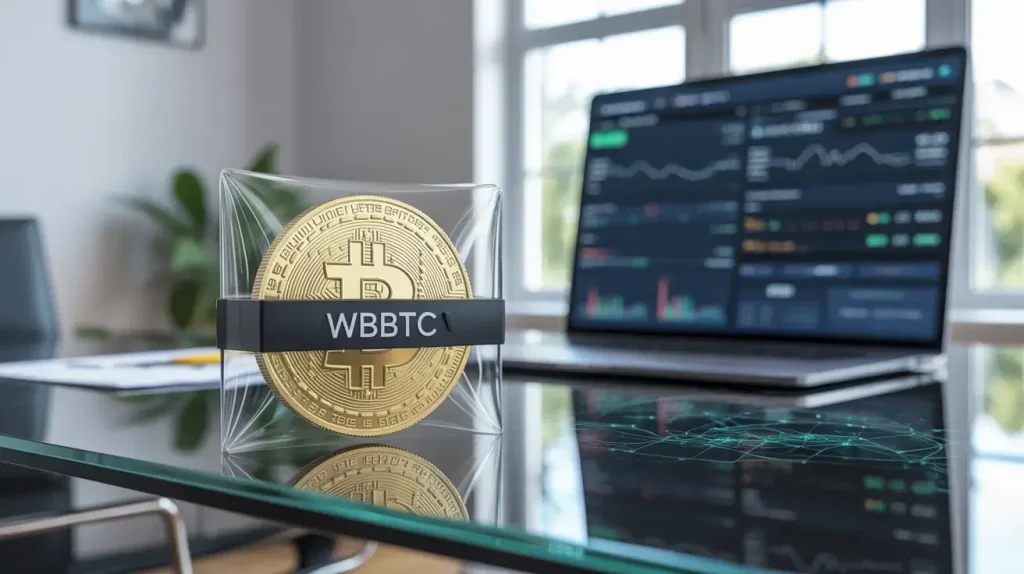
Understanding the main features of WBTC helps you grasp why it has become a cornerstone in DeFi:
1. 1:1 Bitcoin Backing
Each WBTC token is fully backed by Bitcoin. This guarantees that the value of WBTC mirrors Bitcoin in real-time.
2. ERC-20 Compatibility
As an ERC-20 token, WBTC can be used in Ethereum wallets, DeFi applications, and smart contracts.
3. Transparency and Custody
Custodians issue WBTC tokens when BTC is deposited and burn WBTC tokens when BTC is redeemed. The process is fully auditable, providing trust and transparency.
4. Liquidity in DeFi
WBTC allows Bitcoin holders to contribute liquidity to Ethereum-based decentralized exchanges (DEXs) and lending platforms.
How Wrapped Bitcoin Works
Here’s a step-by-step explanation of the mechanics behind what is wrapped bitcoin:
- BTC Deposit: A user deposits Bitcoin with a custodian.
- WBTC Minting: The custodian mints an equivalent amount of WBTC on Ethereum.
- DeFi Integration: WBTC is now available for use in DeFi applications like lending, staking, and liquidity pools.
- Redemption: Users can burn WBTC to retrieve the original BTC from the custodian.
This process ensures a trustworthy bridge between the Bitcoin and Ethereum networks.
Benefits of Wrapped Bitcoin
There are several advantages to using WBTC in the cryptocurrency ecosystem, especially as cryptocurrency payment solutions continue to expand globally:
Cross-Chain Compatibility: Bitcoin holders can interact with Ethereum smart contracts and integrate WBTC into modern cryptocurrency payment systems.
Increased Liquidity: WBTC enhances liquidity for decentralized exchanges and lending platforms, making cryptocurrency payment transactions faster and more efficient.
Passive Income Opportunities: Users can lend or stake WBTC in DeFi to earn yields while still maintaining exposure to Bitcoin within cryptocurrency payment networks.
Transparency and Security: Each WBTC is backed 1:1 by Bitcoin, and transactions are fully auditable, ensuring trust and reliability in cryptocurrency payment processes.
Comparing WBTC and Bitcoin
While WBTC represents Bitcoin, there are a few key differences:
| Feature | Bitcoin (BTC) | Wrapped Bitcoin (WBTC) |
| Blockchain | Bitcoin | Ethereum (ERC-20) |
| Smart Contracts | Limited | Fully compatible |
| Use in DeFi | Rare | Easy integration |
| Custody | Decentralized | Custodian-backed |
Real-Life Case Study: Earning Yield with WBTC
Last year, a friend of mine wanted to earn passive income from her Bitcoin holdings without selling them. She converted some BTC to WBTC and deposited it into a DeFi lending platform on Ethereum. Within weeks, she started earning interest, which she could later redeem as either WBTC or BTC.
This real-world example highlights how Wrapped Bitcoin enables liquidity and yield generation while maintaining a 1:1 value with Bitcoin.
Risks and Considerations
While WBTC is innovative, it’s not without risks:
- Custodian Risk: If the custodian mishandles BTC, token holders could be affected.
- Smart Contract Vulnerabilities: Bugs in Ethereum smart contracts could pose risks.
- Market Liquidity: Large redemptions could affect WBTC liquidity temporarily.
Always use reputable platforms and understand the protocols before investing.
The Future of Wrapped Bitcoin
As DeFi continues to expand, Wrapped Bitcoin is likely to see broader adoption:
- Multi-chain compatibility could allow BTC to interact with more blockchains.
- Enhanced custodial mechanisms and decentralization could reduce counterparty risks.
- WBTC may become a standard bridge asset between Bitcoin and multiple DeFi ecosystems.
Conclusion
Wrapped Bitcoin is a powerful tool bridging Bitcoin and Ethereum, enabling holders to access DeFi opportunities without selling their BTC. By understanding what is wrapped bitcoin and how it works, users can participate in staking, lending, and liquidity provision while keeping the security of Bitcoin. While traditional access points like a Bitcoin ATM allow users to buy or sell BTC physically, Wrapped Bitcoin extends those possibilities into the decentralized finance ecosystem.
Whether you are a beginner exploring DeFi or an experienced trader, WBTC offers flexibility, transparency, and real utility for your Bitcoin holdings.
FAQ’s:
What is the purpose of Wrapped Bitcoin?
Wrapped Bitcoin lets BTC holders use their Bitcoin in Ethereum’s DeFi ecosystem while keeping 1:1 value backing.
Is Wrapped Bitcoin the same as Bitcoin?
No. Wrapped Bitcoin (WBTC) is an ERC-20 token on Ethereum backed 1:1 by Bitcoin, enabling DeFi use.
Can you convert Wrapped Bitcoin to Bitcoin?
Yes, WBTC can be redeemed through custodians to get the equivalent amount of BTC.
Can you unwrap Wrapped Bitcoin?
Yes, unwrapping WBTC returns the original BTC from the custodian, maintaining full 1:1 backing.

David French is an avid tech enthusiast. He loves to read about new innovations and technologies as well as share his thoughts on what he finds. He has a degree in English from the University of South Florida, but spends most of his time writing about technology rather than reading literature.